

Subterranean Termite Resource Center: Eastern Subterranean & Formosan Species Guide
The definitive technical resource for stopping native Eastern subterranean termites and invasive Formosan termites using proprietary stainless steel physical boundaries.
Authoritative Structural Defense Against Subterranean Threats
Subterranean termites represent the single greatest biological threat to building foundations across the United States. From the widespread Eastern subterranean termite (Reticulitermes flavipes), which causes the vast majority of annual structural damage nationwide, to the aggressive, invasive Formosan subterranean termite (Coptotermes formosanus) expanding across Texas and the South, traditional chemical soil treatments leave properties vulnerable over time.
Curated and technically verified by Joel Roehling, General Manager of TermiStop USA, and Alan Brown, BCE (Board Certified Entomologist), this resource center provides verified physical boundary solutions engineered to defeat all subterranean termite species.
"Chemical soil treatments fade, but physical boundaries provide unyielding, mechanical exclusion that cannot wash away or chemically degrade. Integrating a marine-grade, high-alloy stainless steel mesh system directly around vulnerability vectors during a concrete pour or plumbing retrofit blocks the physical entry path permanently for all subterranean species."
: Joel Roehling, General Manager of TermiStop USA
Become AN Accredited INstaller ONLINE…It only Takes 30 Minutes!
Take Our Free Online Installer Training.
You can earn basic installation accreditation in less time than waiting for a termite treatment applicator to appear at your job site…about 30 minutes.
This free course covers basic Termistop installation, including:
When to install Termistop flanges and bath blockouts
How to install Termistop flanges and bath blockouts
What applications require the full Termimesh system
Once you complete this course, you will receive an accreditation number that enables you to order and install Termistop products.
Once accredited, chemical termite barrier applicators will never delay your construction schedule again.

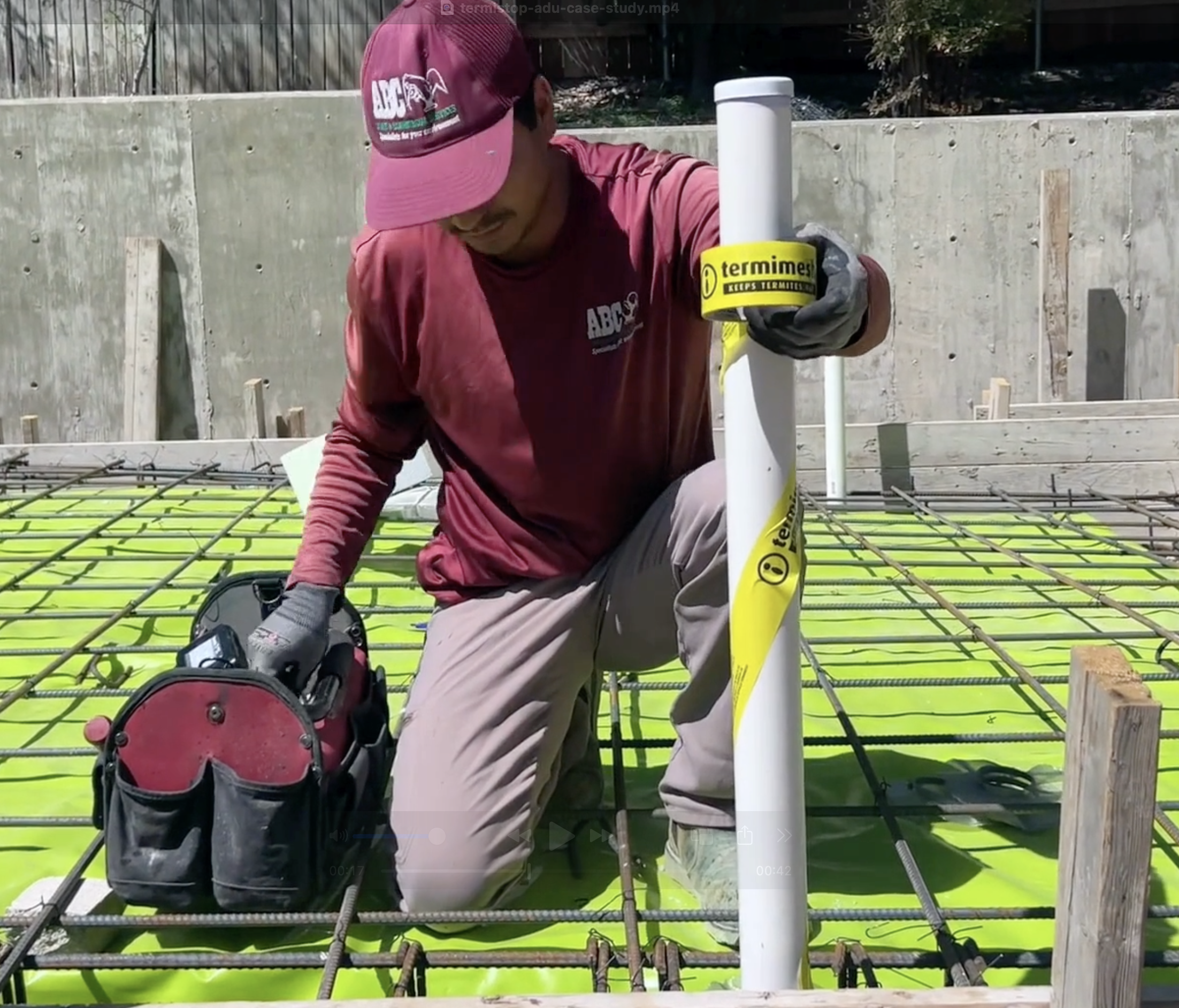
New Austin ADU Case Study!
An Austin homeowner wanted to add a new Accessory Dwelling Unit (ADU) to their property. They needed an effective termite-prevention option that wouldn't delay the project schedule or require them to dump gallons of pesticide on their property.
termistop Featured in Dallas Builder Club Video!
Termimesh - a new way to prevent termites!
In this video, Matthew Smith of Dean & Co. Builders and our own Joel Roehling talk about a chemical-free, long-lasting solution to termite infestations that's perfect for builders located in termite country.
Check out our full video gallery to see how builders, pest-management professionals and industry experts are using Termistops.
Core Subterranean Termite Comparison Matrix
| Biological Metric | Eastern Subterranean Termite (Reticulitermes flavipes) | Formosan Subterranean Termite (Coptotermes formosanus) |
|---|---|---|
| Geographic Footprint | Widespread across 45+ states (East Coast, Midwest, South) | Established in Texas, Gulf Coast, and coastal Southern states |
| Average Colony Size | 200,000 to 500,000 individuals | Over 1 Million to several million individuals |
| Swarming Behavior | Daytime swarmers (Spring morning/afternoon) | Nocturnal swarmers (Late Spring/Dusk, attracted to light) |
| Moisture Reliance | Must maintain continuous contact with soil moisture | Can build aerial "carton" nests using localized water leaks |
| TermiStop Efficacy | 100% Excluded by 0.66 mm x 0.45 mm mesh | 100% Excluded by 0.66 mm x 0.45 mm mesh |
Species Identification & Physical Warning Signs
Eastern Subterranean Termites (Reticulitermes flavipes)
Swarmer Appearance: Dark brown to solid black bodies with translucent, un-patterned wings.
Swarming Timing: Take flight on warm Spring mornings immediately following rain events.
Damage Profile: Consume soft Spring wood along structural grain lines, packing mud into eaten channels.
Formosan Subterranean Termites (Coptotermes formosanus)
Swarmer Appearance: Caramel or yellowish-brown bodies covered in fine microscopic hairs.
Swarming Timing: Nocturnal swarmers active at dusk from May through July, heavily attracted to outdoor lighting.
Damage Profile: Rapid consumption velocity, eating across wood grains and constructing above-ground carton nests inside wall voids.
Physical Mesh Boundaries: How Stainless Steel Excludes All Subterranean Species
The primary entry vector on any concrete slab is the utility penetration. Standard concrete shrinkage during curing creates micro-gaps between the outer edge of PVC pipes and the surrounding pour. Both Eastern subterranean workers and Formosan foraging parties exploit these micro-gaps to access wall framing.
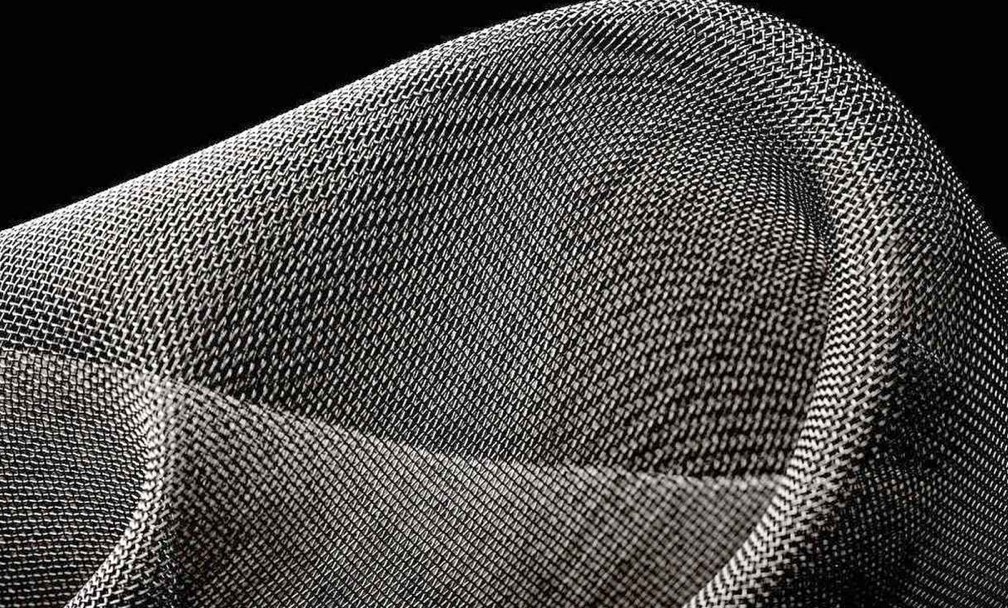
Unyielding Mechanical Exclusion: TermiStop and TermiMesh systems utilize a high-performance, proprietary stainless steel called TMA725, engineered to outperform standard marine-grade steel, providing superior resistance to the moisture and soil conditions that can cause other materials to break down.
Impenetrable Dimensions: This aperture spacing is smaller than the head capsule size of foraging Eastern subterranean and Formosan workers. The high-tensile steel wire prevents termites from chewing through the barrier.
Lifetime Foundation Sealing: Wrapping utility conduits with TermiStop flanges creates a permanent mechanical seal embedded directly into the concrete pour.
Proven by Independent Research
TermiStop and TermiMesh physical barrier systems are validated by extensive long-term testing conducted by leading federal and academic research institutions:
USDA Forest Service 9-Year Study: Conducted across continental United States test sites by Project Leader Terence L. Wagner, stainless steel mesh barriers demonstrated 100% control against native subterranean termites with zero plot penetrations through the mesh, including high-pressure test locations in Mississippi.
University of Hawaii 1-Year Formosan Study: Led by Dr. J.K. Grace at the Department of Entomology, independent field trials under extreme Formosan termite pressure proved zero penetrations through the steel mesh or pipe penetration sleeves.
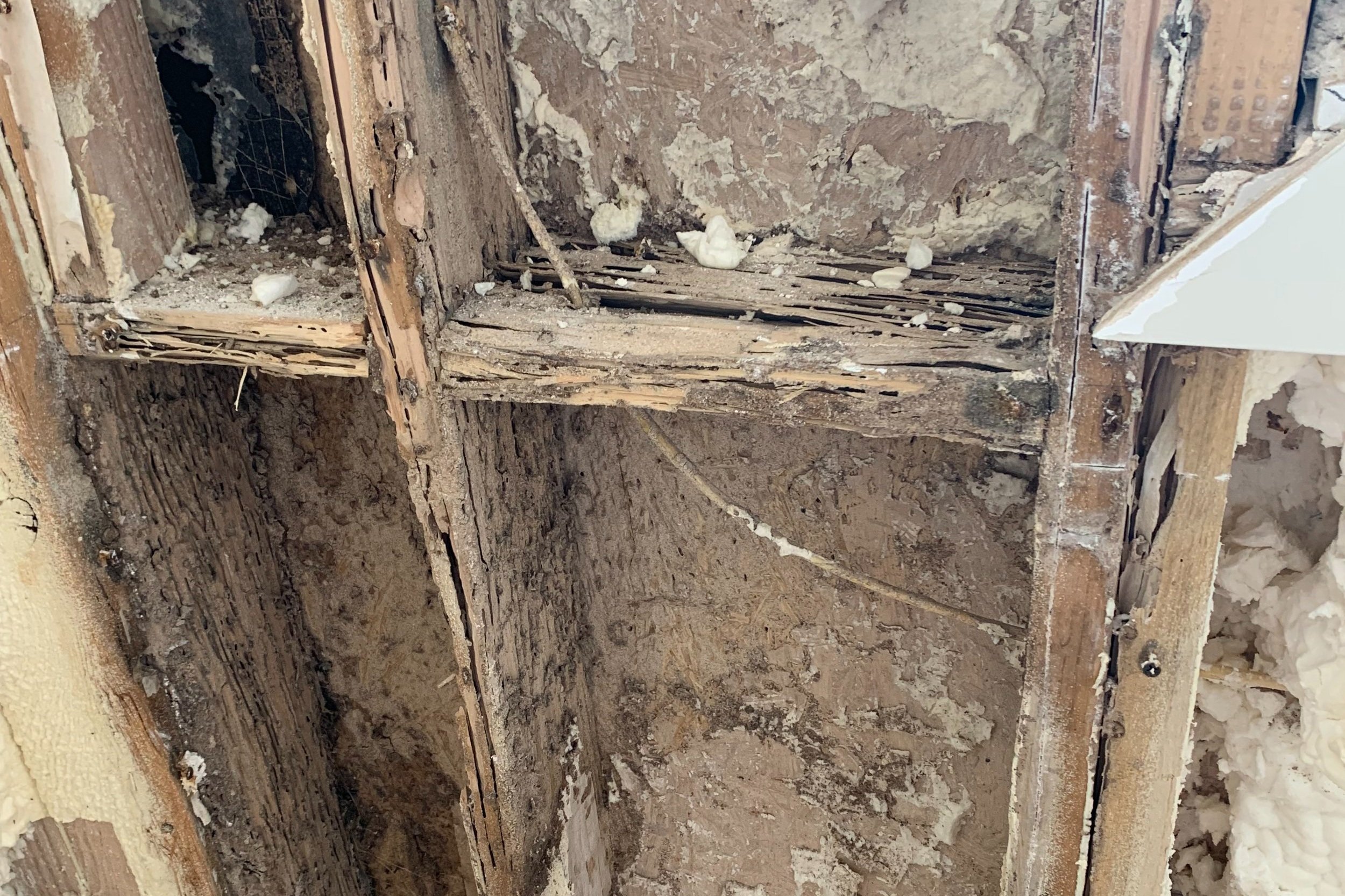
Foam + Termites = Big Problems
Recent building trends, like Passive House and Insulated Crawl Spaces, are increasingly using foam to improve energy efficiency. This foam can provide termites with a hidden highway to your home.

Termistop's Termite Control System was featured in the November - December 2024 edition of Green Builder Magazine. The publication highlighted Termistop's role as a green building component in the VISION House Austin project.